
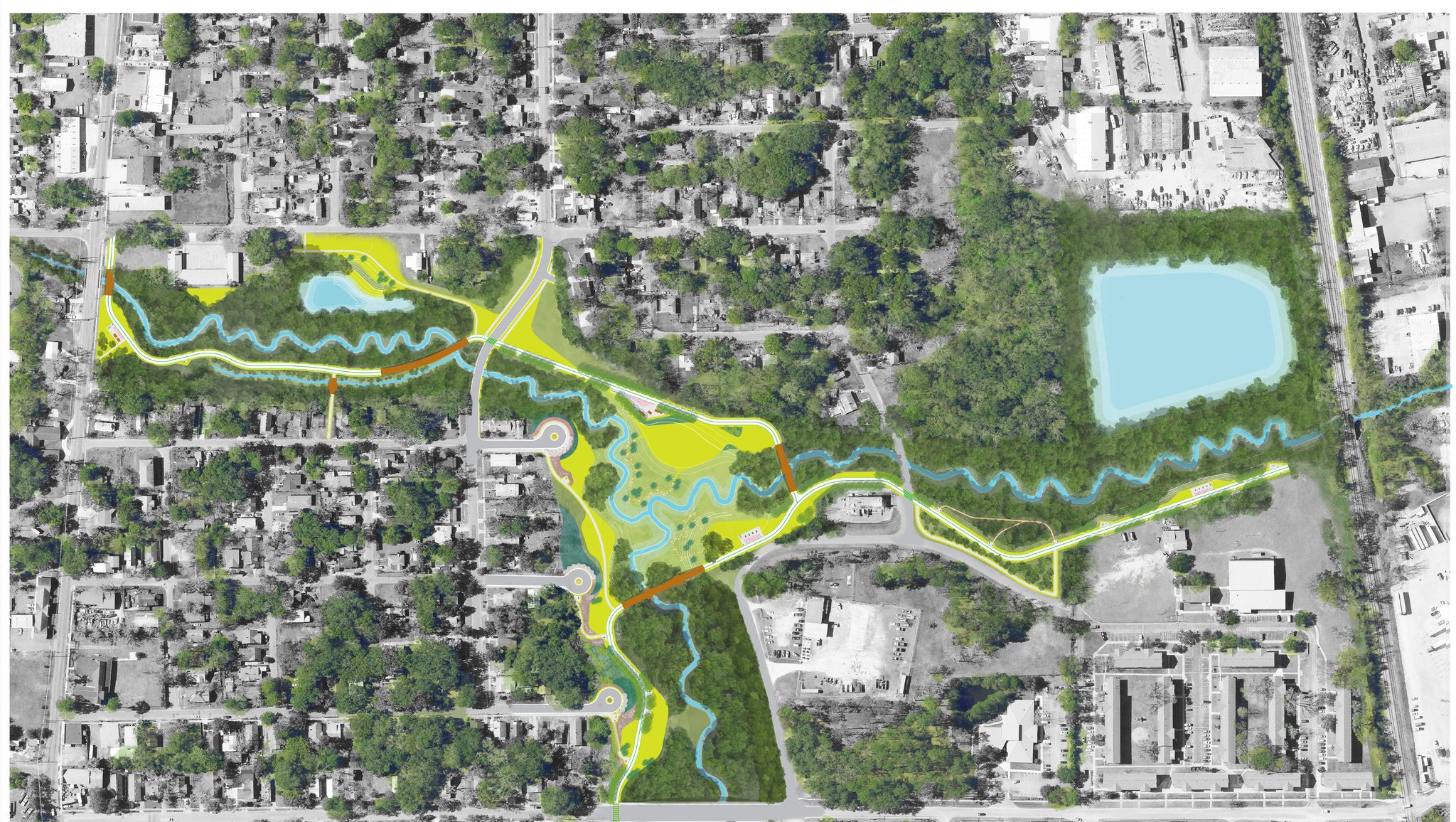
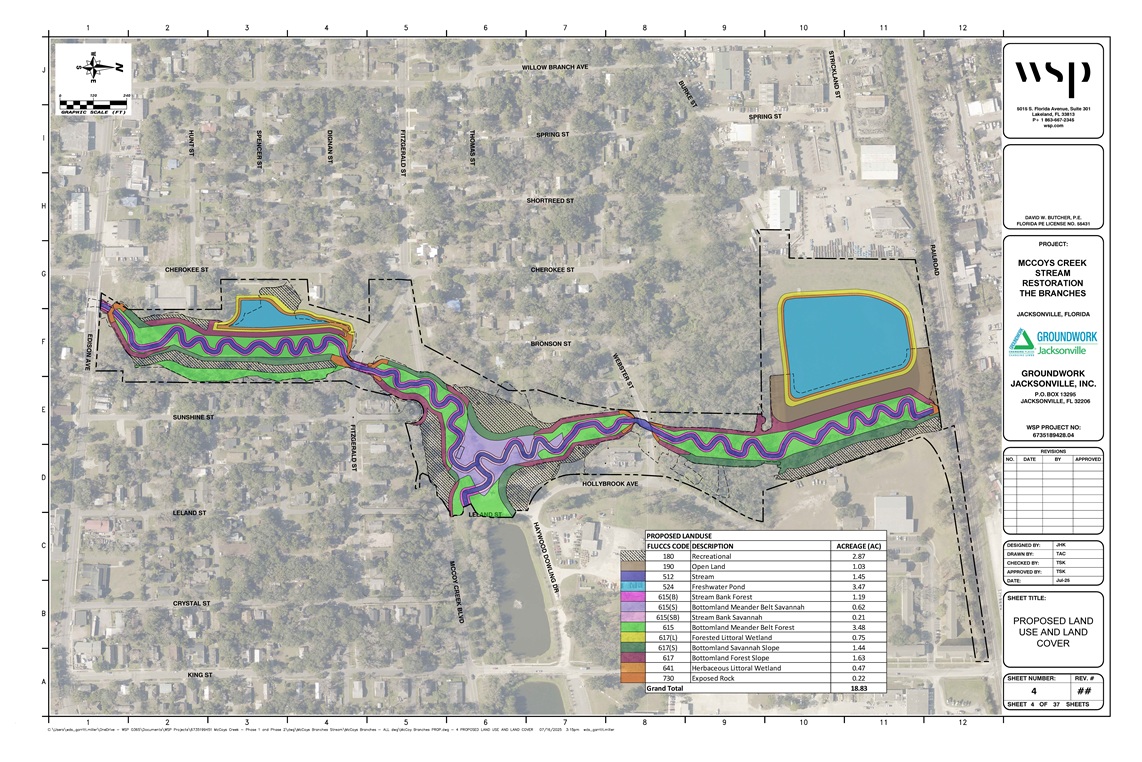
The McCoys Creek Branches form the western headwaters of the creek and drain a 3.74 square mile watershed. The Branches restoration project will restore the natural function of 4,752 linear feet of McCoys Creek headwaters including 14.93 acres of stream and wetlands and 3.9 acres of open space for future recreational use. More than 10,000 trees will be planted in addition to tens of thousands of native plants.
The project area drains a 3.74‑square‑mile watershed into the creek’s main stem. Restored headwaters will slow flows, reduce flood peaks, and significantly improve water quality downstream. The design includes a natural meander within a newly vegetated wetland floodplain, increasing habitat diversity, water storage capacity, and ecological resilience.
Groundwork Jacksonville received a grant from the Jacksonville Environmental Protection Board to study potential nutrient reduction. It is estimated that the Branches project will remove 3,600 pounds of nitrogen and 570 pounds of phosphorus from the creek each year. The restoration will create habitat for fish, forage species, benthic macroinvertebrates, and a wide range of native birds through the establishment of freshwater forested wetlands, herbaceous wetlands, riparian buffers, and stream enhancements.
Modeling shows the McCoys Creek restoration benefits homes too. Within the branches area, 20 residential structures are currently at risk during a 100‑year storm. When all phases are complete, the creek restoration project will remove 18 of the structures from flood risk and the remaining two will experience less than one foot of flood risk.
Like McCoys Creek Phases 1 and 2, the Branches project is being implemented in partnership with the City of Jacksonville (COJ). Groundwork is leading design, community engagement and outreach efforts.
The project was designed by environmental engineering specialist, WSP in collaboration with SCAPE, a landscape architecture and urban design practice. The design was wholly funded by Groundwork Jacksonville through a grant from the National Fish and Wildlife Foundation (NFWF) and private donations.
Construction begins in February 2026 at a projected cost of $12.65 million. Kiewit is the construction contractor and C&ES is the construction engineering inspection firm. Funding is supported by a $5.18 million Florida Resilient Coastlines Program grant from the Florida Department of Environmental Protection, and a $2.6 million NOAA Transformational Habitat Restoration and Coastal Resilience Grant. COJ will fund the remaining project cost in addition to contamination remediation.
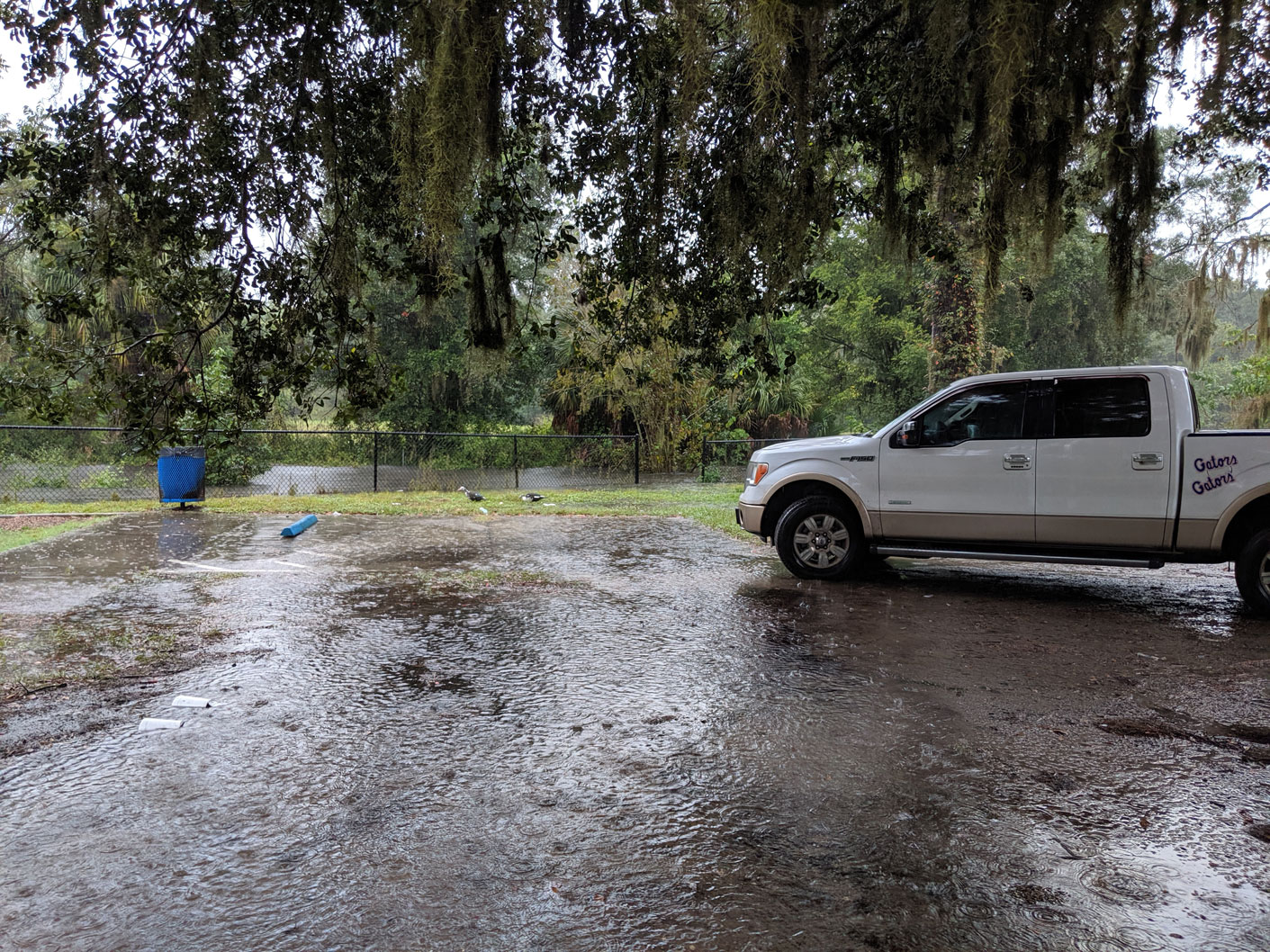
Confluence Park: Before
Click image to enlarge.
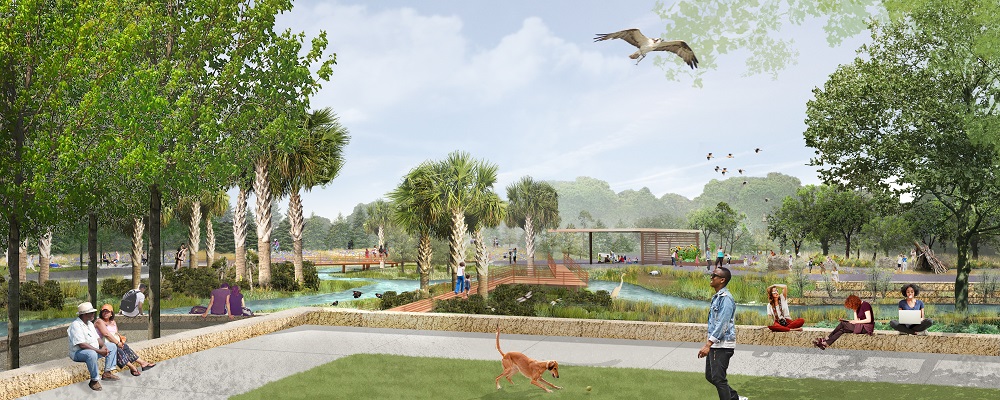
Confluence Park: After
Click image to enlarge.